
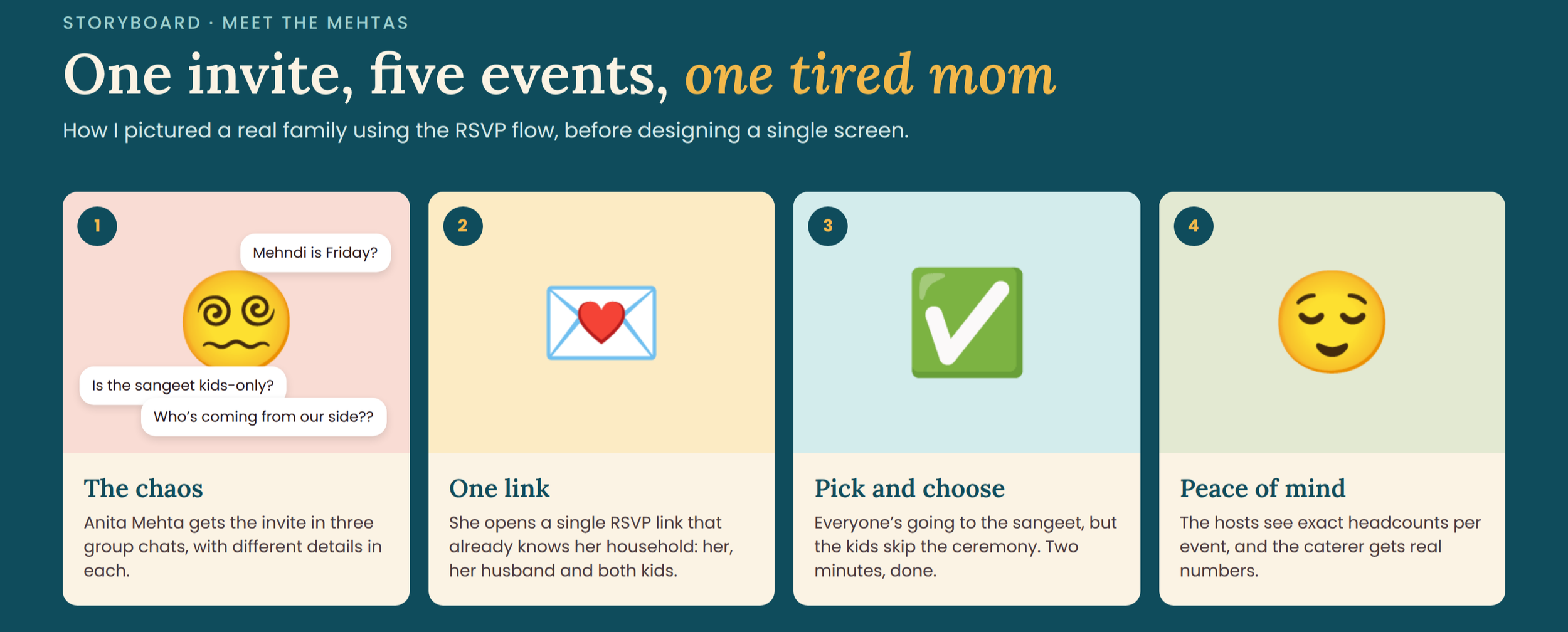
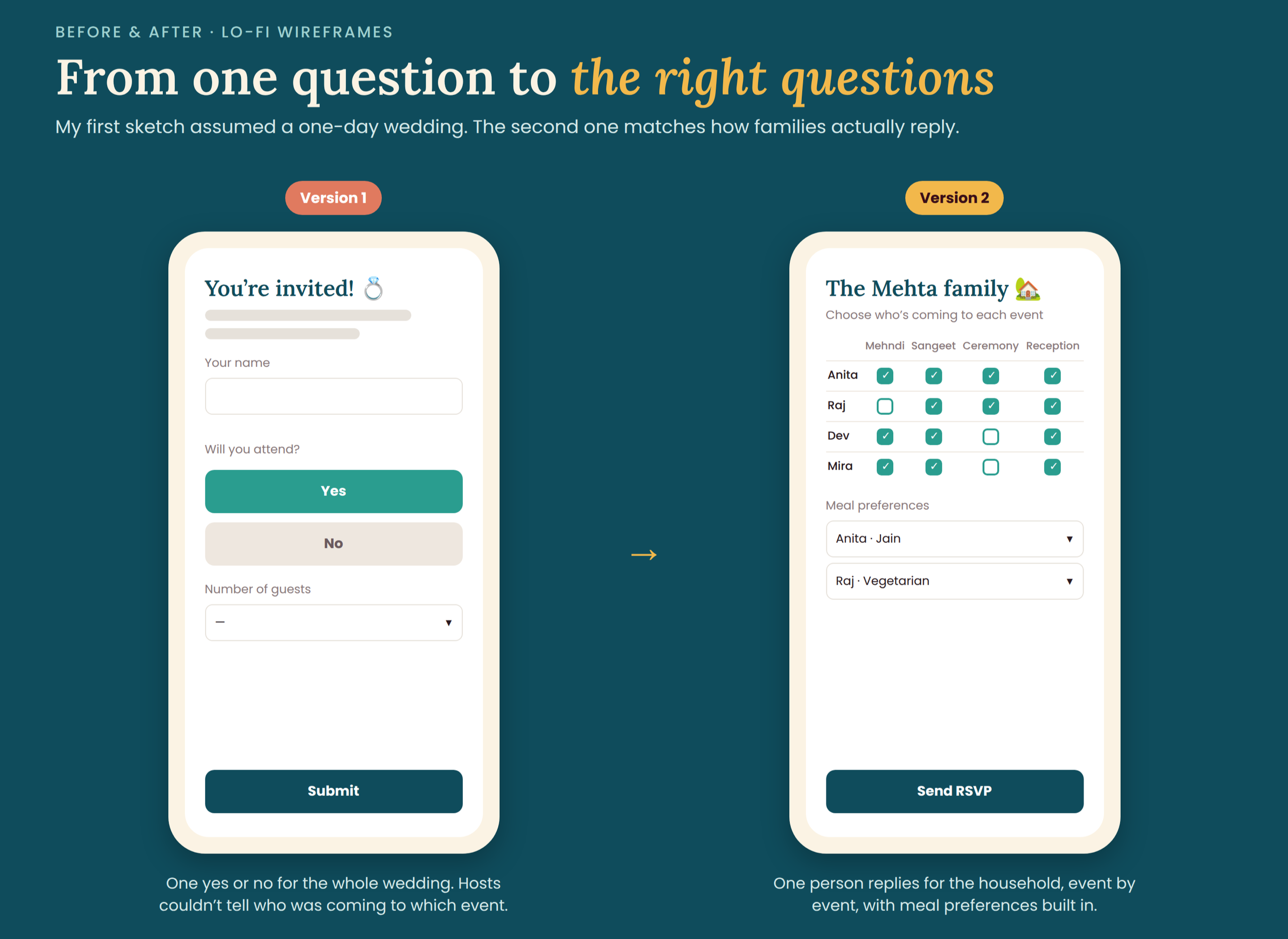
When I started sketching the RSVP feature for Shaadi Simplified, I thought it would be the easiest part of the app. One question, two buttons: Will you attend? Yes / No. Done, right?
Not quite. 😅
Three key RSVP design decisions
The moment I pictured a real South Asian wedding, that simple form fell apart. There’s the mehndi, the sangeet, the haldi, the ceremony, the reception. Guests don’t reply as individuals. Families reply together. And somewhere, a caterer is waiting for a headcount for each event.
So I stepped back and asked: what do hosts actually need to know, and what’s the easiest way for guests to tell them?
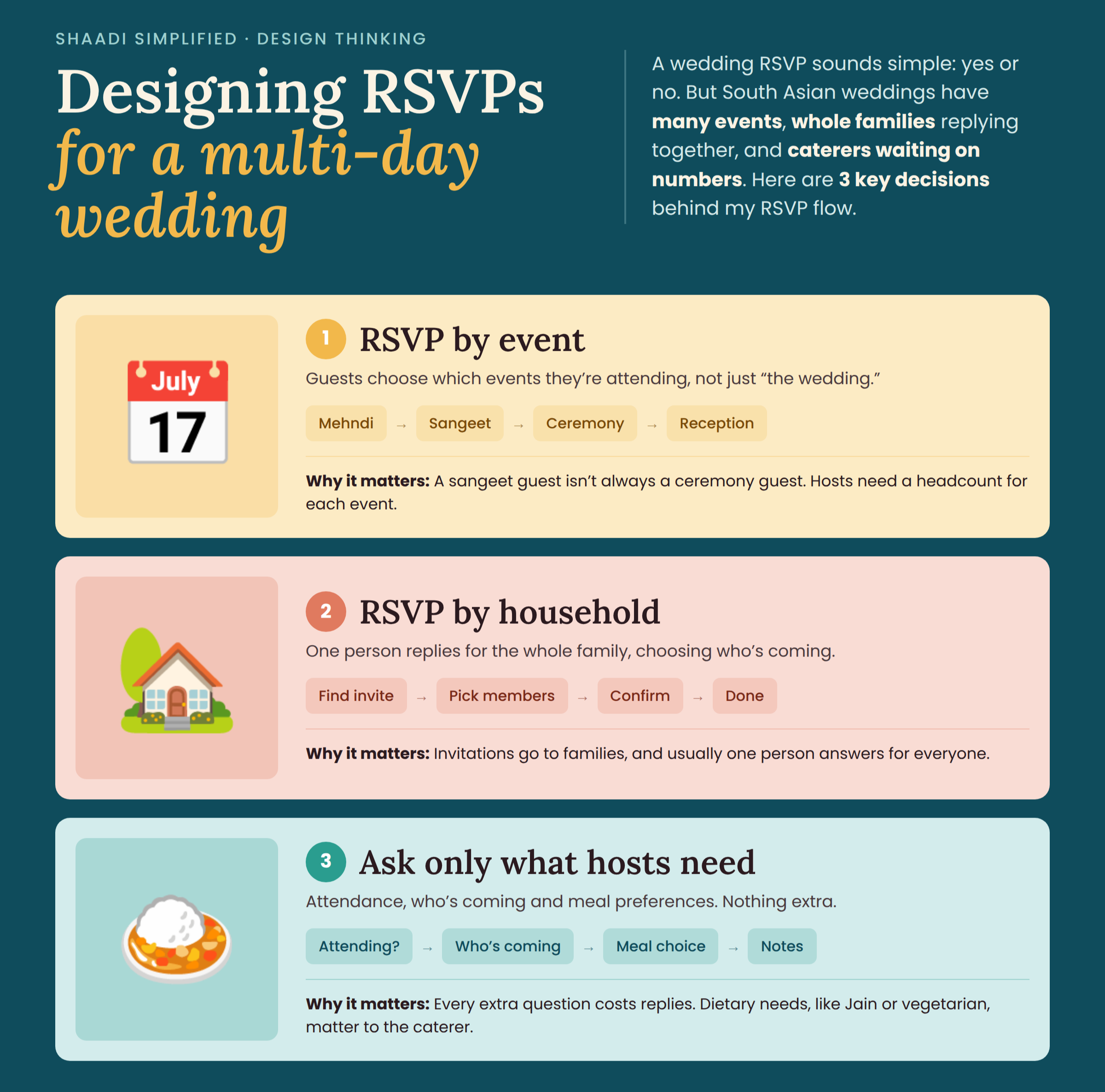
Decision 1: RSVP by Event, Not by Wedding
Most RSVP tools treat a wedding as one event. But a cousin from out of town might come to everything, while a coworker might only attend the reception. If hosts only get one “yes,” they have no idea how many people to expect at the sangeet.
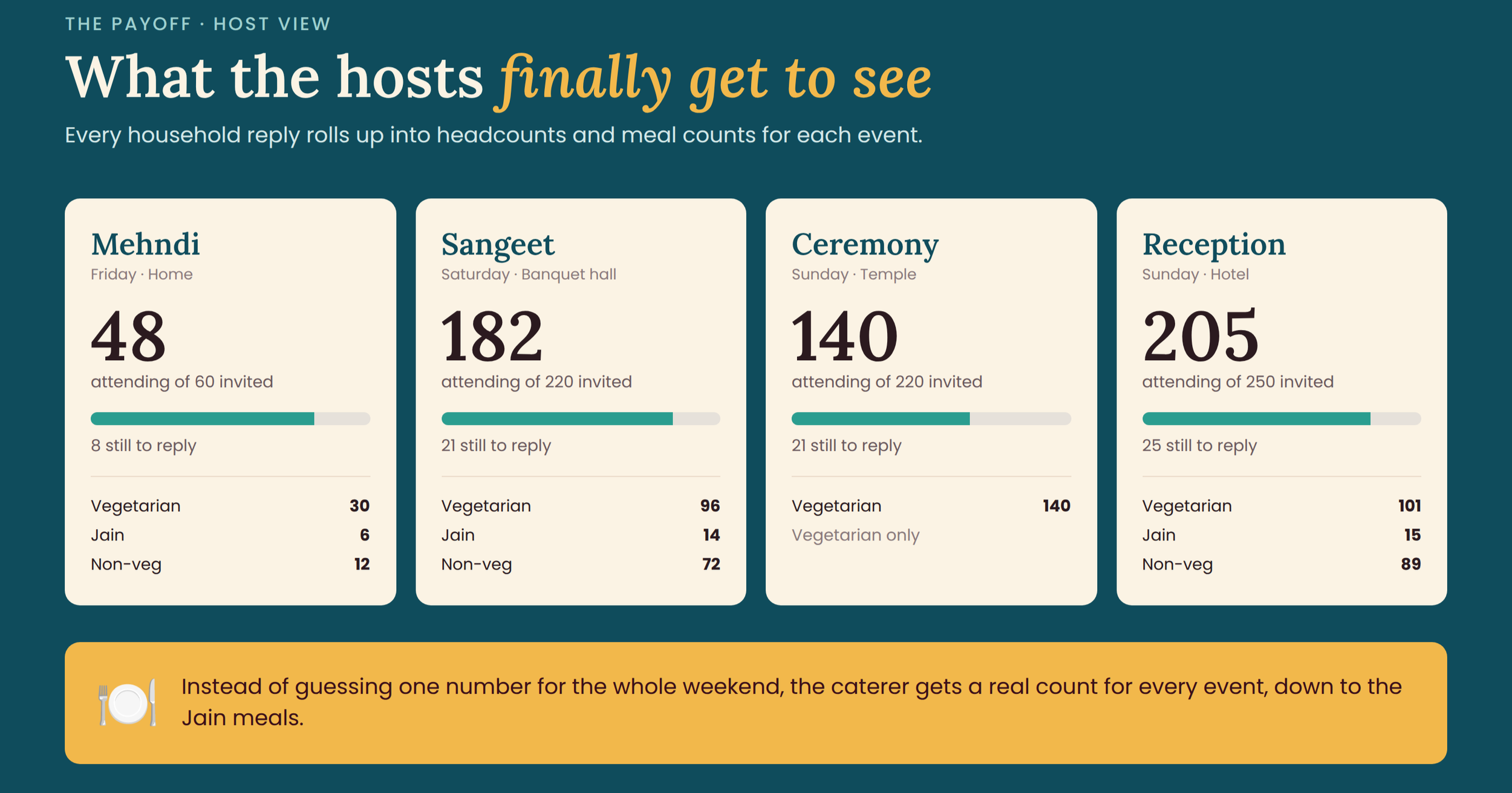
So guests choose which events they’re attending. Each event gets its own headcount, which means more accurate planning for food, seating, and space.
Decision 2: RSVP by Household
In South Asian families, invitations are usually sent to a family, not a person. And typically, one person, often a parent, replies for everyone.
Instead of making every family member RSVP separately, one person can open the invite, see everyone in their household, and choose who’s coming to what. It matches how families already behave, instead of forcing a new habit.
Decision 3: Ask Only What Hosts Need
It’s tempting to ask guests everything: song requests, travel plans, outfit colors. But every extra question makes people more likely to put off replying.
I kept the flow to the essentials: attendance, who’s coming, and meal preferences. Food made the cut because dietary needs, like Jain, vegetarian, or allergies, really matter to the caterer. Everything else can wait.
What I Learned
“Simple” features hide the most assumptions. The RSVP looked obvious until I tested it against how real families behave. The best design questions often come from the features we assume are easy.
Design for how people already behave. Families already reply as a unit. The design should follow that behavior, not fight it.
Every question has a cost. Good forms are as much about what you leave out as what you put in.
When you RSVP to a wedding, do you reply for yourself or your whole family? Tell me in the comments. I’m curious if my assumptions hold up! 😊